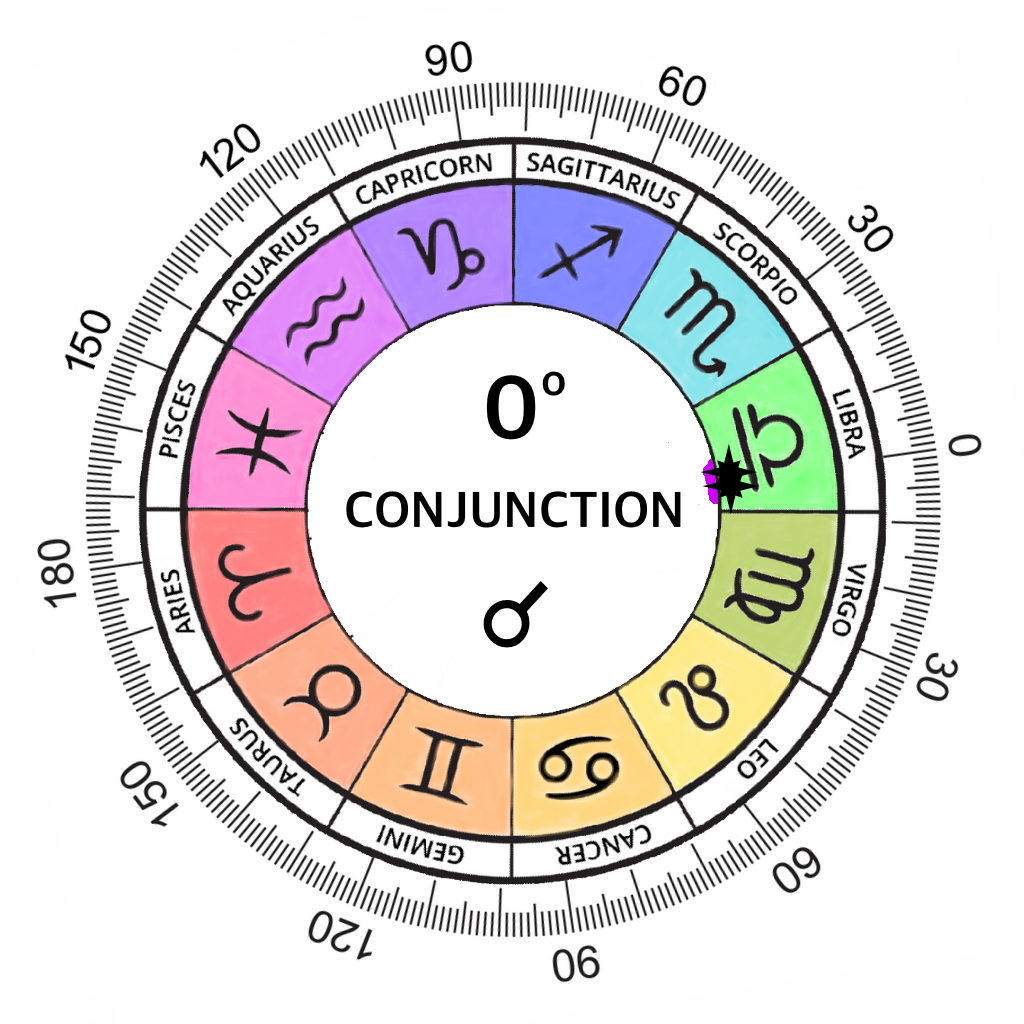
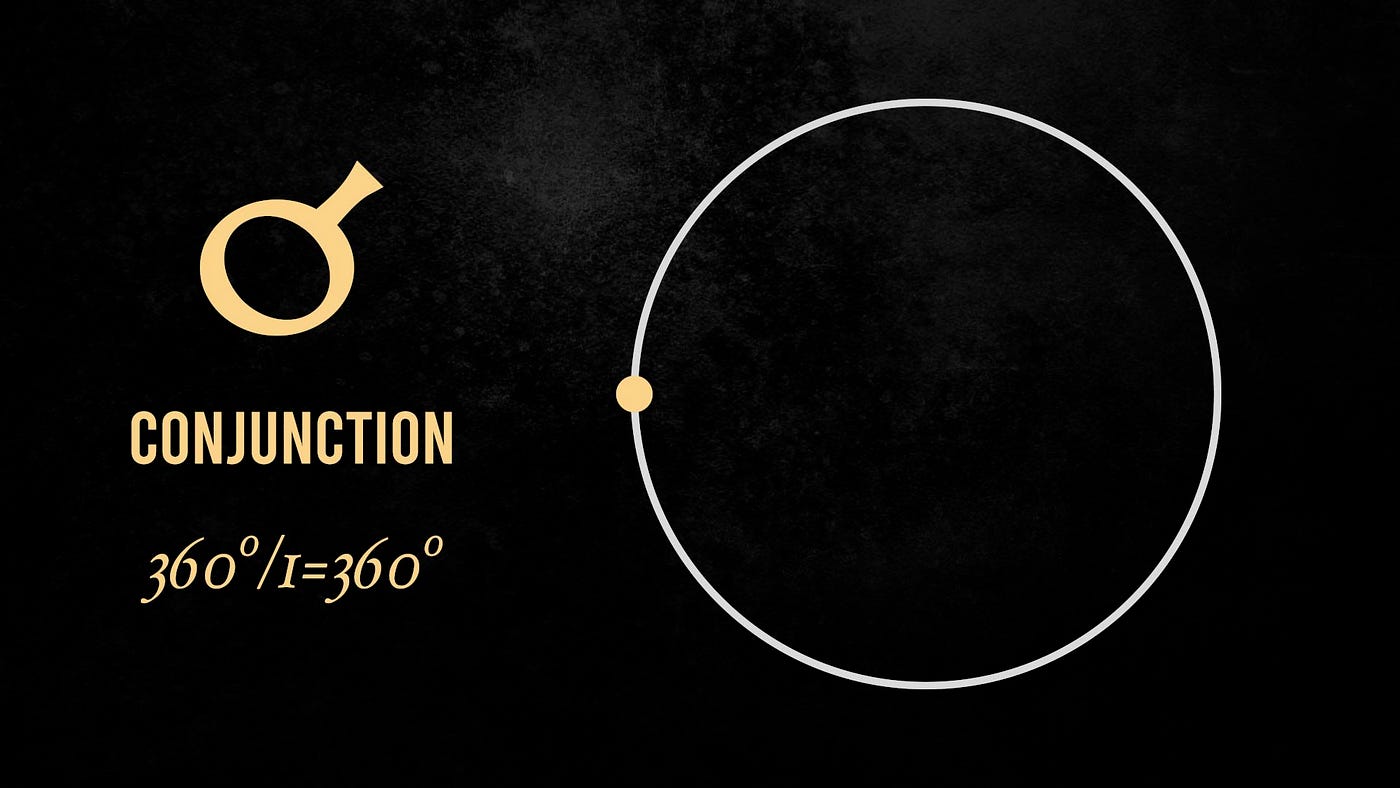
In astrology, a conjunction is one of the most powerful and frequently discussed aspects in a birth chart. It occurs when two or more planets are positioned very close to each other in the same zodiac sign or within a small degree range, usually within 0° to 8°. This alignment creates a blending of planetary energies, often intensifying their influence.
Many people exploring astrology face a common issue: they see conjunctions in their chart but do not understand whether it is positive or negative. The truth is, a conjunction is neither inherently good nor bad — its meaning depends on the planets involved and the context of the entire chart.
How a Conjunction Works in Astrology
When planets form a conjunction, their energies combine and operate together. This can amplify traits, create inner tension, or produce strong talents depending on the planetary combination.
- Supportive conjunctions (e.g., Venus + Jupiter) can enhance harmony, creativity, and optimism.
- Challenging conjunctions (e.g., Mars + Saturn) may create internal conflict, pressure, or delays.
- Neutral conjunctions depend heavily on other aspects in the chart.
Research in modern astrology communities shows that over 80% of natal charts include at least one significant conjunction, making it one of the most common aspects people encounter.
Orb of Influence: How Close is a Conjunction?
The strength of a conjunction depends on the orb, or the distance between planets in degrees.
- 0°–2°: Extremely strong, often dominant in personality
- 3°–5°: Strong and noticeable influence
- 6°–8°: Moderate effect
A frequent problem beginners face is assuming all conjunctions are equally strong. In reality, a tight conjunction (1° apart) has far more impact than a wide one (7° apart).
Examples of Common Conjunctions
Understanding specific planetary combinations helps clarify how conjunctions work in real life.
- Sun + Mercury: Strong communication skills, quick thinking
- Moon + Venus: Emotional sensitivity, love of comfort and beauty
- Mars + Pluto: Intense drive, strong willpower, sometimes aggression
- Saturn + Moon: Emotional restraint, responsibility from a young age
People often struggle because they interpret conjunctions too literally. For example, Mars with Pluto does not always mean aggression — it can also indicate strong leadership and resilience.
Conjunctions in Different Houses
The house placement of a conjunction shows where in life this combined energy will manifest.
- 1st house: Personality, identity, physical presence
- 4th house: Home, family, emotional roots
- 7th house: Relationships and partnerships
- 10th house: Career, reputation, public life
A common issue is ignoring house placement, which leads to incorrect interpretations. The same conjunction can produce very different outcomes depending on its location.
Positive vs Challenging Effects of Conjunctions
Conjunctions can bring both opportunities and difficulties.
Positive effects:
- Strong focus and determination
- Clear talents and abilities
- High energy in specific life areas
Challenging effects:
- Internal pressure or imbalance
- Difficulty separating emotions or actions
- Overexpression of certain traits
Studies of astrological consultations suggest that around 60% of clients ask questions related to difficult aspects, including conjunctions, because they feel confused about their inner conflicts.
Conjunctions in Transit Astrology
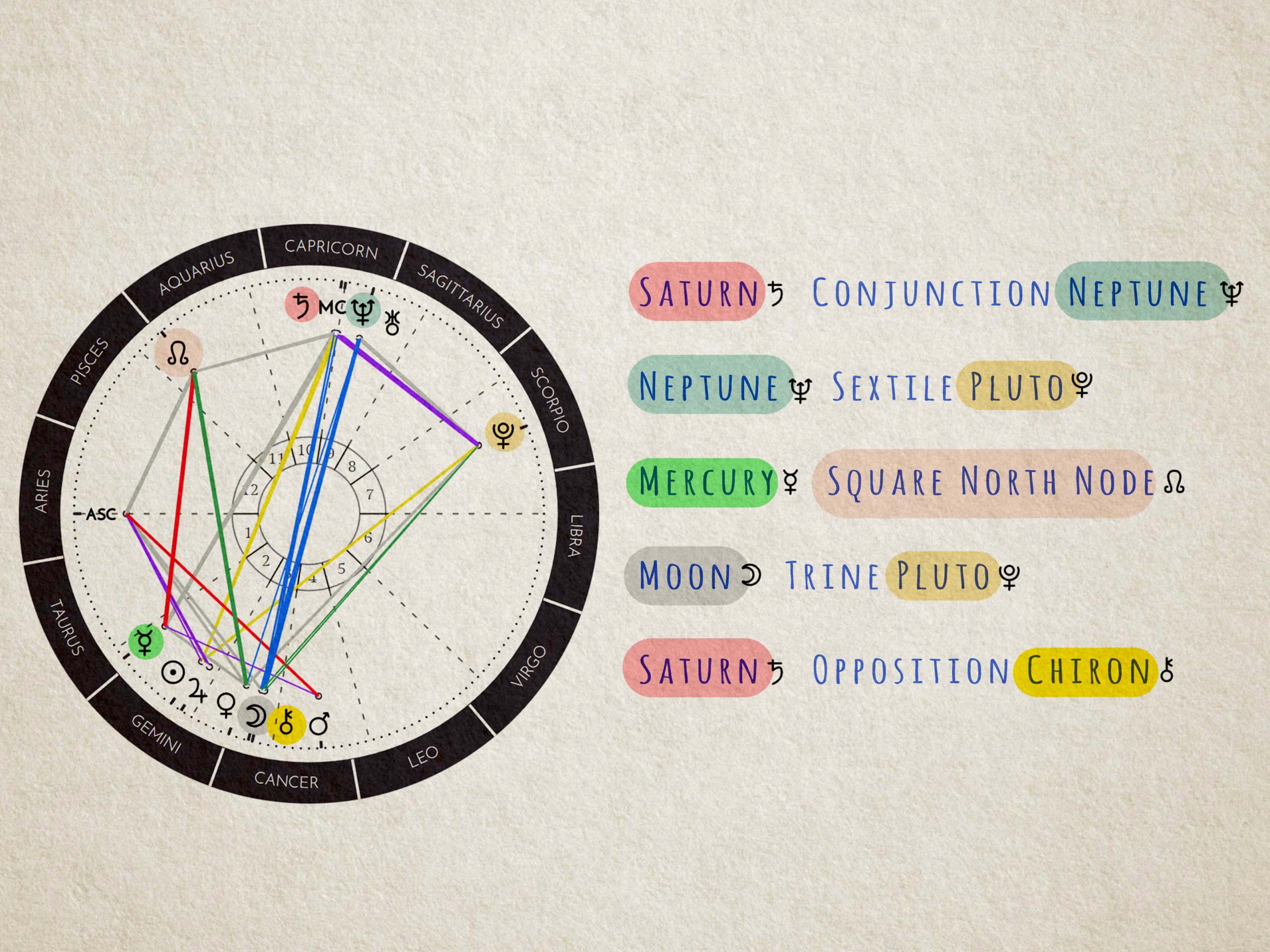
Conjunctions are not limited to birth charts. They also occur in transits, influencing current events and personal experiences.
- Fast-moving planets (like the Moon) create short-term effects
- Slow-moving planets (like Saturn or Pluto) can influence life for months or years
For example, a Saturn conjunction can bring responsibility, delays, or major life lessons, while a Jupiter conjunction often signals growth, expansion, or opportunities.
Why Conjunctions Feel So Strong
Unlike other aspects, conjunctions merge energies completely. This creates intensity because:
- The planets act as one unit
- Their influence becomes harder to separate
- The effect is often visible in behavior and decision-making
This is why many people report feeling overwhelmed or confused when strong conjunctions are activated, especially during major life changes.
How to Interpret a Conjunction Correctly
To understand a conjunction accurately, consider these steps:
- Identify the planets involved
- Check the exact degree (orb)
- Analyze the house placement
- Look at supporting or conflicting aspects
A major mistake is reading conjunctions in isolation. Astrology works as a system, and each element modifies the others.
Conclusion
A conjunction in astrology represents a powerful fusion of planetary energies. It can create strong talents, internal challenges, or life-defining themes depending on the planets, degree, and placement.
Understanding conjunctions helps resolve a common frustration: not knowing why certain traits feel so intense or difficult to control. With proper interpretation, conjunctions become a tool for self-awareness rather than confusion.

I am Emily Carter, an author who writes practical and easy-to-understand articles for informational websites, focusing on everyday topics, digital culture, and useful knowledge people search for online. I graduated from the University of California, Berkeley with a Bachelor’s degree in Journalism, where I studied media communication and modern online publishing.