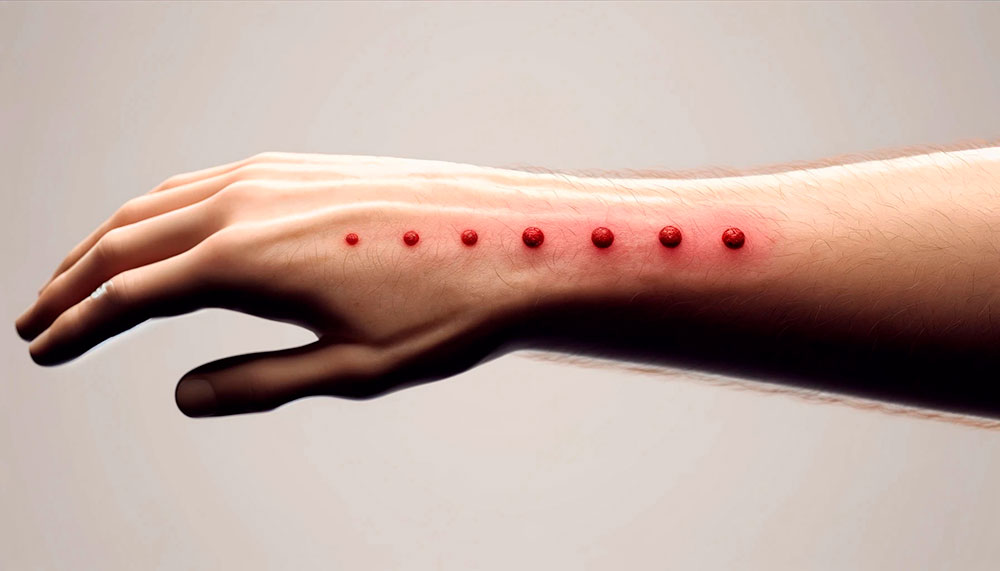
Bed bug bites usually look like small, red, itchy bumps on the skin. In many cases, they appear in a line, a cluster, or a loose zigzag pattern. People often notice them on areas that stay uncovered during sleep, such as the arms, hands, neck, face, shoulders, and lower legs.
One reason this problem causes so much stress is that bed bug bites do not look the same on everyone. One person may get a few small itchy marks, while another may develop larger swollen welts. Some people react quickly, and others may not notice any skin change right away. That is why many people wake up confused, wondering whether the marks came from mosquitoes, fleas, an allergic skin reaction, or actual bed bugs.
A practical point matters here: skin marks alone do not confirm a bed bug infestation. You also need to check for other signs around the bed, mattress seams, headboard, furniture joints, and nearby cracks.
How bed bug bites usually appear on the skin
In simple terms, bed bug bites are often:
- Red or pink bumps
- Itchy, sometimes very itchy
- Often with a darker center or tiny puncture point
- Grouped in a line, row, or cluster
- Found on exposed skin after sleep
Many people describe them as looking like small welts or raised spots. In mild cases, the bumps stay small. In stronger reactions, the area can become more swollen, warmer, and more irritated from scratching.
What pattern makes people suspect bed bugs
The pattern is one of the biggest clues. A single bug may feed more than once in the same area, so the bites can appear close together. This is why people often notice:
- Three or more bites in a row
- A tight group of itchy bumps
- A zigzag pattern across exposed skin
This pattern is common, but not guaranteed. Some people have only one or two visible marks. Others have many. The body’s immune response changes how the skin looks, so the same infestation can leave very different marks on different people in the same home.
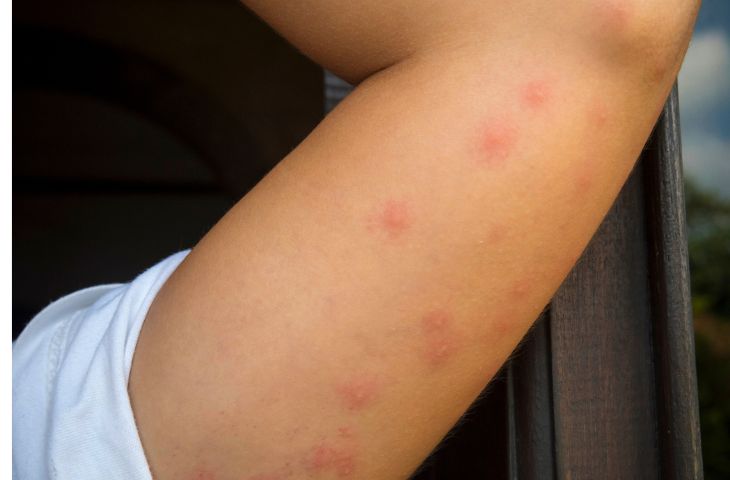
Where bed bug bites are most often found
Bed bugs usually feed at night when a person is sleeping. Because of that, the bites often show up on body parts that are easier for the insect to reach.
- Arms and forearms
- Hands
- Neck
- Face
- Shoulders
- Lower legs
If marks are mostly under tight clothing, around the ankles only, or focused around the waist, people often need to think about other causes too, including fleas, contact dermatitis, or other skin problems.
How long it takes for bed bug bites to appear
This part confuses many people. The skin reaction is not always immediate. Some people notice itching within hours. Others do not react for several days. If the person has never been bitten before, the itching may be delayed even longer.
That delay causes common real-life problems. People may sleep in one place, travel to another, and then blame the wrong hotel, apartment, guest room, or piece of furniture. This is one reason bed bug cases are often discovered later than expected.
What bed bug bites feel like
Most people focus on the appearance, but the symptoms matter just as much. Common complaints include:
- Itching, often worse in the morning or at night
- Burning or irritation after scratching
- Small swollen bumps
- Sleep disturbance because people become anxious about being bitten again
For some people, the bites are more than a skin issue. The stress of not knowing what is biting them, repeatedly checking the bed, washing everything, and losing sleep becomes the bigger problem.
What bed bug bites do not always look like
Many articles oversimplify the picture. Bed bug bites do not always look like neat rows of identical red spots. They can also appear as:
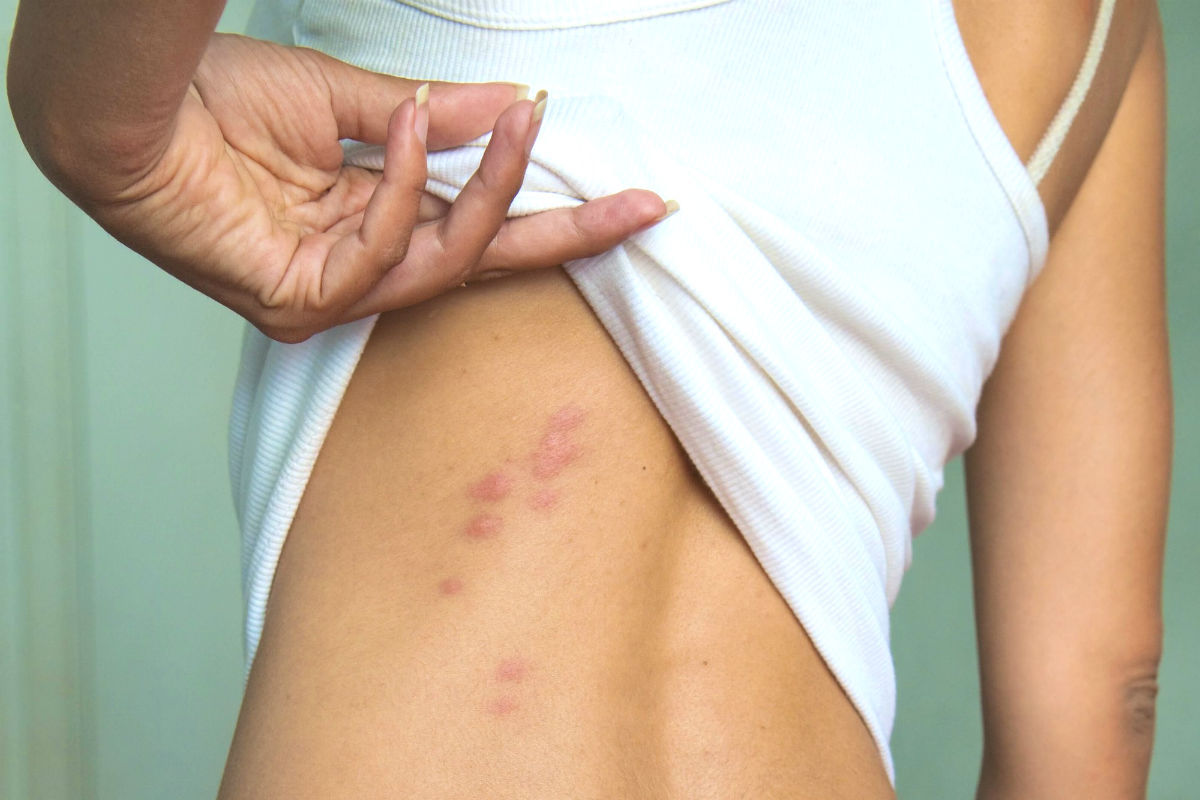
- Scattered itchy bumps
- Larger raised welts
- Areas that look like a mild rash
- Marks that become crusted from scratching
If scratching breaks the skin, the area may become more red, painful, or swollen because of a secondary skin infection. At that point, the original bite pattern can become harder to recognize.
Bed bug bites compared with other common bites and rashes
People often misidentify bed bug bites. Here is a simple comparison.
- Mosquito bites: often more random, more isolated, and not usually in a row after sleep
- Flea bites: often affect the ankles and lower legs, especially in homes with pets
- Hives: can come and go quickly and may change shape
- Scabies: often causes intense itching with a different distribution, including finger webs, wrists, and skin folds
- Contact dermatitis: often follows contact with fabric, detergent, or skincare products and may look more like a patchy rash than grouped bites
If you only look at the skin and ignore the room, it is easy to guess wrong.
Signs that make bed bug bites more likely
The skin marks become more suspicious when they happen together with physical signs in the room. Check for:
- Small blood spots on sheets or pillowcases
- Dark specks that may be bed bug droppings
- Shed skins
- Live bugs in mattress seams, the headboard, bed frame joints, or nearby furniture
- New bites that appear after sleeping in the same bed
That combined picture is more useful than the bites alone.
Can bed bug bites be severe
Most bed bug bites are uncomfortable rather than dangerous, but the reaction can still be intense. Some people develop large itchy welts, and heavy scratching can damage the skin. In rare cases, people can have a stronger allergic reaction.
You should seek medical help if you notice:
- Rapid swelling
- Breathing problems
- Pus, increasing pain, or spreading redness
- Fever
- Bites that do not improve or a rash that keeps worsening
How long bed bug bites last
For many people, uncomplicated bed bug bites improve within about one to two weeks. The exact timing depends on how sensitive the skin is and how much the area is scratched. Ongoing new bites usually mean the infestation has not been removed.
This is another common problem: people treat the skin but forget the source. If the bugs remain in the room, the marks keep returning.
What to do if you think the bites are from bed bugs
If the marks look suspicious, take a practical step-by-step approach:
- Do not panic. Bed bugs are difficult and stressful, but the problem can be managed.
- Inspect the bed area carefully. Look at seams, folds, labels, cracks, and the headboard.
- Wash bedding and clothing on a hot cycle if the items can be safely washed that way.
- Dry on high heat when the fabric allows it.
- Avoid moving infested items through the home without sealing them first.
- Contact a licensed pest control professional if you find evidence or keep getting new bites.
For skin relief, many people use a cool compress, anti-itch products, or an antihistamine after reading the label or speaking with a pharmacist or clinician. The key is to avoid heavy scratching, because that is what often turns a simple bite into a bigger skin problem.
Important facts many people do not know
There are a few facts that surprise people:
- Bed bugs are not a sign of poor hygiene. They can appear in clean or messy places.
- Not everyone reacts to bites. One person in the home may have obvious marks while another has none.
- Bites alone are not enough for diagnosis. Room inspection matters.
- Bed bugs have not been shown to transmit disease to humans.
That last point is important because many people become afraid after seeing multiple bites. The bigger risk is usually loss of sleep, scratching, stress, and delayed control of the infestation.
Statistics that help put the problem into context
Bed bug bites are often misunderstood. Survey data shows that recognition is still poor, which is one reason infestations are missed early. In a recent U.S. survey, only 29% of Americans could correctly identify bed bugs. That means many people may confuse the signs or react too late.
Another practical medical point is timing. A skin reaction does not always happen right away. Some people may start itching within days, but in others the itchy reaction can take up to 14 days after the first bites. That delay makes self-diagnosis harder.
At the same time, public health sources continue to note that bed bugs have not been shown to spread disease to humans. So while the bites can be very irritating, the main problems are usually itching, skin irritation, scratching, stress, and repeated exposure if the infestation is not removed.
When you should stop guessing and get help
If you keep waking up with new itchy bumps, if several people in the same home have similar marks, or if you find blood spots, dark specks, or bugs around the bed, it is time to move from guessing to action. A medical professional can help if the skin reaction is severe or infected. A pest control professional can confirm whether the home has bed bugs and explain the next treatment steps.
In short, what do bed bug bites look like? Most often, they look like small red itchy bumps that appear in a line, cluster, or zigzag pattern on exposed skin. But because the reaction varies from person to person, the smartest approach is to look at both the skin and the sleeping area, not the marks alone.

I am Emily Carter, an author who writes practical and easy-to-understand articles for informational websites, focusing on everyday topics, digital culture, and useful knowledge people search for online. I graduated from the University of California, Berkeley with a Bachelor’s degree in Journalism, where I studied media communication and modern online publishing.