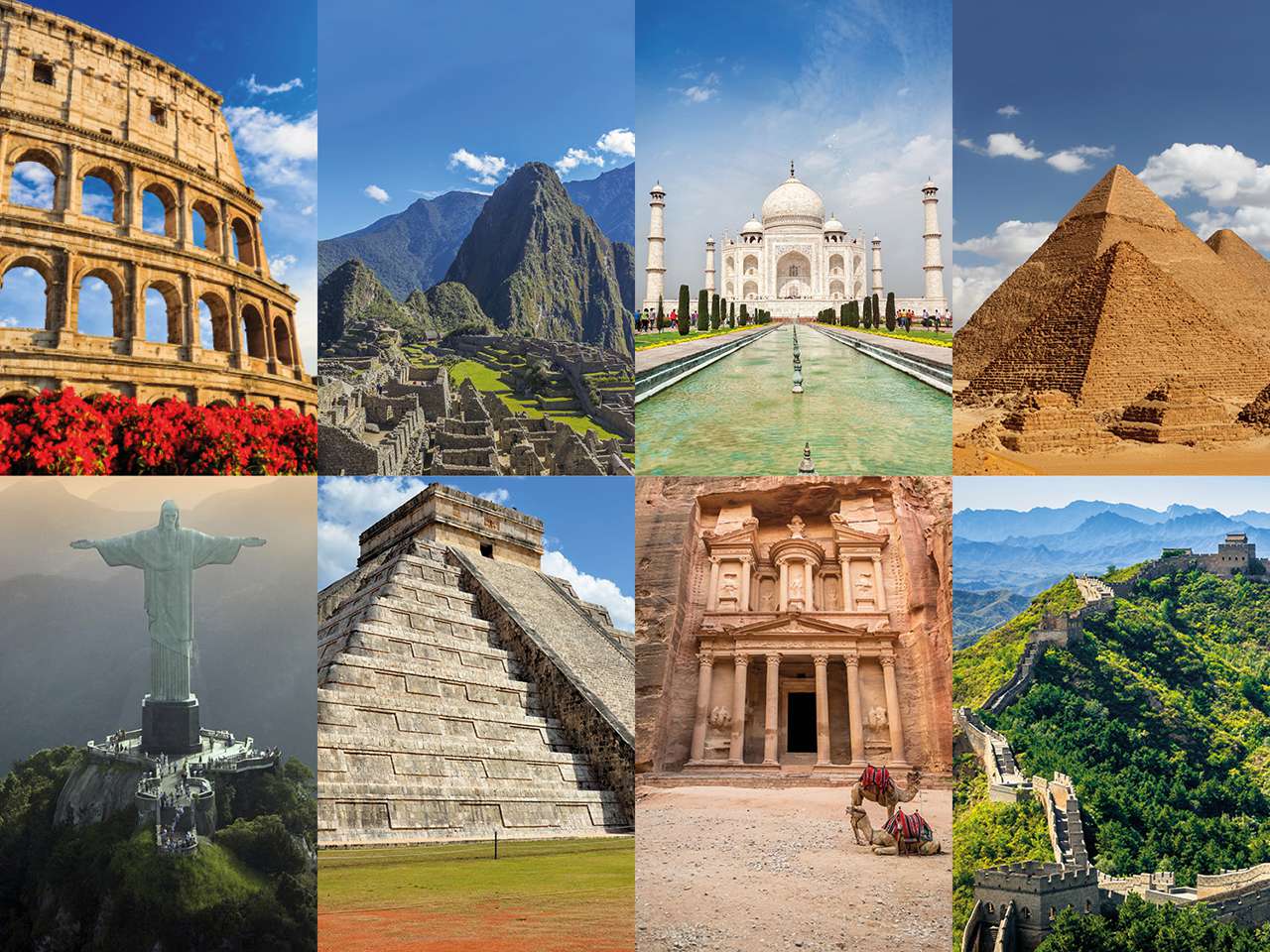
Human civilization has always been fascinated by monumental architecture. Long before modern technology appeared, ancient societies created structures that still amaze historians, engineers, and travelers. The concept of the Seven Wonders of the World originally appeared in ancient Greek writings. Early travelers and historians tried to describe the most extraordinary constructions they had seen across different civilizations.
Over time, the idea evolved. The ancient list included remarkable achievements of early cultures around the Mediterranean region. However, most of those structures were destroyed by earthquakes, wars, or simply the passage of time. Because of this, a modern list known as the New Seven Wonders of the World was created in 2007 after a global vote that involved more than 100 million people from different countries.
Today these seven landmarks represent different cultures, architectural traditions, and historical periods. Millions of tourists travel each year to see them with their own eyes. They are not just beautiful monuments; they also tell stories about the people who built them and the civilizations that shaped human history.
Why the Seven Wonders of the World Still Fascinate People
Every year millions of travelers visit famous historical monuments. Some destinations attract visitors because of their beauty, others because of their historical importance. The Seven Wonders of the World combine both of these qualities.
According to international tourism statistics, more than 80 million people visit these seven locations every year combined. Many travelers spend years planning these trips because visiting several of them requires traveling across multiple continents.
- They represent major achievements in architecture and engineering.
- Each wonder reflects a different culture and historical era.
- Many of them were built centuries ago without modern tools.
- They attract millions of visitors every year.
Travelers often face challenges when visiting these places. Some locations are extremely crowded, especially during tourist season. Others require long journeys through mountains or remote regions. Despite these difficulties, the desire to see these landmarks remains strong.

The Great Wall of China
The Great Wall of China is one of the most famous constructions in human history. It stretches across northern China and was originally built to protect Chinese states from invasions. Construction began more than 2,000 years ago and continued for centuries during different dynasties.
The entire defensive system measures over 21,000 kilometers according to Chinese archaeological research. Large sections were built during the Ming Dynasty between the 14th and 17th centuries.
Travelers visiting the wall often discover that it is far more complex than expected. Instead of one continuous wall, it includes:
- Watchtowers
- Military fortresses
- Signal towers
- Stone and brick defensive lines
Climbing some parts of the wall can be physically demanding because the steps are uneven and steep. However, the panoramic views from the mountains make the effort worthwhile.
Petra in Jordan
Petra is an ancient city carved directly into red sandstone cliffs in southern Jordan. It was built by the Nabataean civilization more than 2,000 years ago and served as a major trade center connecting Arabia, Egypt, and the Mediterranean.
The most famous structure in Petra is Al-Khazneh, also called the Treasury. Its massive carved facade stands about 40 meters high and is one of the most photographed landmarks in the Middle East.
Visitors often enter Petra through a narrow canyon called the Siq, which stretches for over one kilometer. Walking through this canyon creates a dramatic moment when the Treasury suddenly appears at the end.
Despite its beauty, Petra presents challenges for travelers. The site is large and requires hours of walking in desert conditions. During summer, temperatures can exceed 35°C, making exploration physically demanding.
Christ the Redeemer in Brazil
Christ the Redeemer is one of the most recognizable statues in the world. It stands on the summit of Mount Corcovado overlooking Rio de Janeiro in Brazil.
The statue was completed in 1931 and stands 30 meters tall, with an additional 8-meter pedestal. Its arms stretch 28 meters wide, symbolizing peace and openness.
Engineers used reinforced concrete and soapstone to build the monument. This combination was chosen because the materials could resist strong winds and weather conditions on the mountain.
More than two million tourists visit the statue each year. Many people reach the top by train through Tijuca National Park, while others hike through the forest trails.
Machu Picchu in Peru
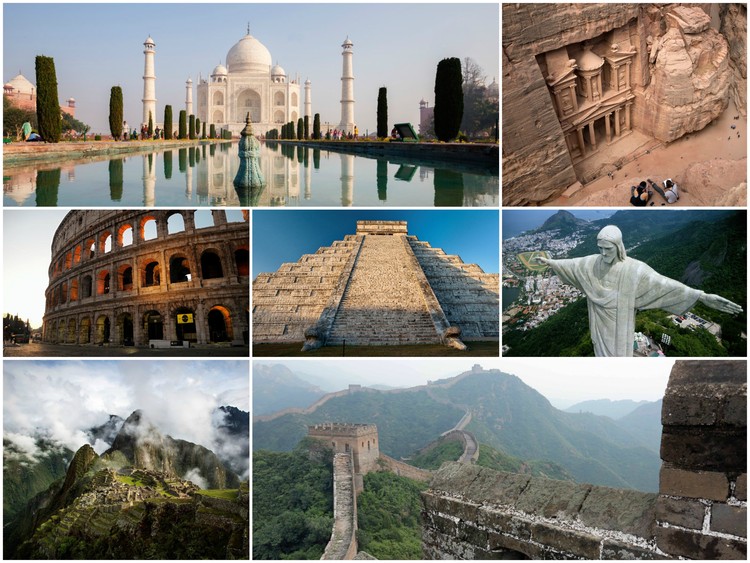
Machu Picchu is one of the most mysterious archaeological sites in the world. It was built by the Inca civilization in the 15th century high in the Andes Mountains of Peru.
The city sits at an altitude of about 2,430 meters above sea level. Spanish conquistadors never discovered it, which helped preserve the site for centuries.
Today Machu Picchu is a UNESCO World Heritage Site and one of the most visited places in South America. Tourists often reach it after hiking the famous Inca Trail.
Travelers often encounter several difficulties when planning a visit:
- Limited daily visitor permits.
- High altitude that can cause fatigue.
- Long travel routes through mountains.
Despite these obstacles, the view of the ancient terraces and temples surrounded by cloud-covered peaks creates an unforgettable experience.
Chichen Itza in Mexico
Chichen Itza was one of the largest cities of the Maya civilization. It flourished between the 9th and 13th centuries in what is now Mexico’s Yucatán Peninsula.
The most famous structure is the pyramid known as El Castillo or the Temple of Kukulkan. The pyramid stands about 24 meters high and is famous for its astronomical design.
During the spring and autumn equinox, sunlight creates a shadow that looks like a serpent moving down the pyramid’s staircase. This effect demonstrates the advanced astronomical knowledge of the Maya civilization.
More than 2.5 million tourists visit the site each year. Because of this popularity, the area can become crowded during peak travel seasons.
The Roman Colosseum
The Colosseum in Rome is the largest ancient amphitheater ever built. Construction began in 72 AD under Emperor Vespasian and was completed in 80 AD.
The arena could hold between 50,000 and 65,000 spectators. It hosted gladiator battles, animal hunts, and dramatic performances.
The structure demonstrates advanced Roman engineering. It includes complex systems of corridors, elevators, and trapdoors that allowed animals and performers to appear suddenly in the arena.
Today the Colosseum remains one of the most visited monuments in Europe. However, visitors sometimes face long waiting lines, especially during summer tourism seasons.

The Taj Mahal in India
The Taj Mahal is often considered the most beautiful monument ever built. Located in Agra, India, it was commissioned by Mughal emperor Shah Jahan in memory of his wife Mumtaz Mahal.
Construction began in 1632 and lasted more than 20 years. Thousands of artisans and craftsmen worked on the complex.
The structure is made primarily from white marble and decorated with semi-precious stones. Its symmetrical design and reflection in the surrounding pools create a breathtaking visual effect.
The Taj Mahal receives around 7 to 8 million visitors every year. Pollution and environmental damage have become major concerns, leading to strict preservation efforts by the Indian government. The Seven Wonders of the World represent some of the greatest achievements in architecture, engineering, and artistic vision. Each monument reflects the culture, technology, and beliefs of the civilization that created it.
Even in the modern world filled with skyscrapers and advanced technology, these historical landmarks continue to inspire curiosity and admiration. They remind people how much determination and creativity ancient societies possessed. For travelers, historians, and architects, visiting these wonders is more than tourism. It is an opportunity to see how human imagination shaped the world long before modern tools existed. The fact that many of these structures have survived for centuries proves the incredible skill of the builders who created them.

I am Emily Carter, an author who writes practical and easy-to-understand articles for informational websites, focusing on everyday topics, digital culture, and useful knowledge people search for online. I graduated from the University of California, Berkeley with a Bachelor’s degree in Journalism, where I studied media communication and modern online publishing.