If you want to calculate your astrology compatibility in a way that gives you more than a vague zodiac match, you need to compare two full birth charts, not just two Sun signs. In astrology, this process is called synastry. It looks at how two charts interact through planetary placements, aspects, houses, and the balance of elements and modalities.
Many people run into the same problem: they check a simple “Leo + Scorpio” result online, get a score, and still feel confused because the relationship in real life does not match the description. That happens because astrology compatibility is much more detailed than sign-to-sign matching.
Interest in astrology remains strong. Pew Research reported that 27% of U.S. adults say they believe in astrology, and 30% say they consult astrology, tarot cards, or fortune tellers at least once a year. Separate YouGov tracking showed that 93% of Americans have heard of astrology. These numbers help explain why so many people search for a practical way to measure relationship potential through charts.
What astrology compatibility really means
Astrology compatibility is a comparison of two natal charts to understand how two people connect emotionally, mentally, physically, and long term. A serious compatibility reading usually covers:
- Synastry — how one person’s planets interact with the other person’s planets
- House overlays — where one person activates key life areas in the other person’s chart
- Composite chart — a chart of the relationship itself
- Element balance — fire, earth, air, and water distribution
- Modality balance — cardinal, fixed, and mutable patterns
This means compatibility is not only about romance. It can also show communication issues, emotional tension, sexual chemistry, loyalty patterns, and whether two people handle stress in similar or opposite ways.
What information you need before you calculate compatibility
To do it properly, gather birth data for both people:
- Date of birth
- Exact birth time
- Birthplace
The most important mistake people make is skipping the birth time. Without an accurate birth time, the Ascendant, house cusps, and many relationship details can shift. You may still get a rough chart without time, but the reading becomes less precise, especially for house overlays and Moon or angle contacts.
If you do not know the exact time, use the date and place first, but treat the result as partial. In that case, focus more on planet-to-planet aspects and less on houses, rising signs, and exact angles.
Step 1: Start with the Big Three
The fastest useful starting point is the Sun, Moon, and Rising sign. These three points describe identity, emotional needs, and outward behavior.
- Sun sign shows core personality and life direction
- Moon sign shows emotions, comfort needs, and bonding style
- Rising sign shows first impression, instinctive behavior, and relationship approach
If two people have easy Sun compatibility but very difficult Moon compatibility, the relationship may look strong on paper at first and still feel emotionally draining in daily life. This is a common frustration for couples who rely only on Sun signs.
Example:
- Good Sun match can support attraction and shared goals
- Difficult Moon match can create misunderstandings, mood clashes, and emotional distance
Step 2: Check the personal planets first
When astrologers calculate compatibility, they usually focus first on the personal planets because they shape everyday relationship dynamics.
- Moon — emotional safety and attachment
- Mercury — communication style
- Venus — affection, love language, attraction
- Mars — desire, drive, conflict style, physical chemistry
These pairings matter a lot:
- Moon to Moon — emotional compatibility
- Mercury to Mercury — conversation and understanding
- Venus to Mars — attraction and romantic chemistry
- Moon to Venus — tenderness and emotional warmth
- Moon to Saturn — stability or emotional heaviness
Many relationships feel strong at the beginning because of good Venus-Mars chemistry, but later run into communication problems if Mercury contacts are weak or harsh.
Step 3: Learn the main aspects
In synastry, an aspect is the angle between two planets. These angles describe flow, tension, attraction, or pressure.
The main aspects are:
- Conjunction (0°) — strong focus, intense blending
- Sextile (60°) — easy support, natural opportunity
- Trine (120°) — smooth harmony, effortless compatibility
- Square (90°) — friction, challenge, growth through conflict
- Opposition (180°) — polarity, pull, strong attraction with tension
Easy aspects do not always mean a better relationship. Hard aspects do not always mean failure. A chart with only soft energy may feel pleasant but passive. A chart with some tension may feel intense, motivating, and highly memorable. The key is balance.
What usually creates the biggest relationship struggles:
- Moon square Saturn
- Mercury square Mercury
- Venus square Saturn
- Mars square Mars
- Moon square Mars
What often supports closeness:
- Moon trine Moon
- Venus trine Venus
- Moon trine Venus
- Mercury sextile Mercury
- Sun trine Moon
Step 4: Compare elements and modalities
Another practical way to calculate compatibility is to compare the chart’s overall pattern.
Elements:
- Fire — passion, action, enthusiasm
- Earth — stability, practicality, consistency
- Air — ideas, communication, curiosity
- Water — emotion, intuition, sensitivity
Modalities:
- Cardinal — initiates
- Fixed — stabilizes
- Mutable — adapts
If one person has a chart dominated by water and fixed energy, and the other is mostly air and mutable, they may experience a repeated problem: one wants emotional depth and consistency, while the other needs flexibility and mental space.
This does not automatically make the match bad. It means the relationship may require more awareness and better emotional translation.
Step 5: Look at house overlays
House overlays show where one person affects the other person’s life. This is one of the most useful parts of compatibility analysis and one of the easiest to miss in quick online calculators.
Examples:
- Your partner’s Venus in your 7th house can increase partnership energy
- Your partner’s Mars in your 8th house can increase intensity and sexual magnetism
- Your partner’s Saturn in your 4th house can feel stabilizing or emotionally heavy
- Your partner’s Mercury in your 3rd house can improve conversation and mental connection
The most relationship-sensitive houses are often the 1st, 4th, 5th, 7th, 8th, and 12th. Strong overlays here can make a connection feel immediate, intense, or hard to forget.
Step 6: Check Saturn, not just Venus and Mars
One of the biggest beginner errors is looking only at attraction. Chemistry matters, but long-term compatibility often depends on Saturn.
In relationship astrology, Saturn can show:
- commitment
- responsibility
- longevity
- lessons
- pressure
Strong Saturn links can help a relationship last, but they can also create a feeling of duty, delay, or emotional weight. People often feel confused when a relationship has obvious loyalty but also feels hard. Saturn is often part of that story.
Step 7: Use a composite chart for the full picture
Synastry shows how two people affect each other. A composite chart shows the relationship as its own unit. This is useful when a couple asks:
- Why are we so drawn to each other?
- Why do we keep repeating the same pattern?
- Why do we feel different together than we do alone?
If synastry looks exciting but the composite chart is full of pressure, the relationship may feel magnetic but unstable. If synastry has tension but the composite chart is strong, the connection may still have real staying power.
How to calculate astrology compatibility yourself
You do not need to be a professional astrologer to get a useful first reading. Follow this order:
- Collect both birth dates, birth times, and birthplaces
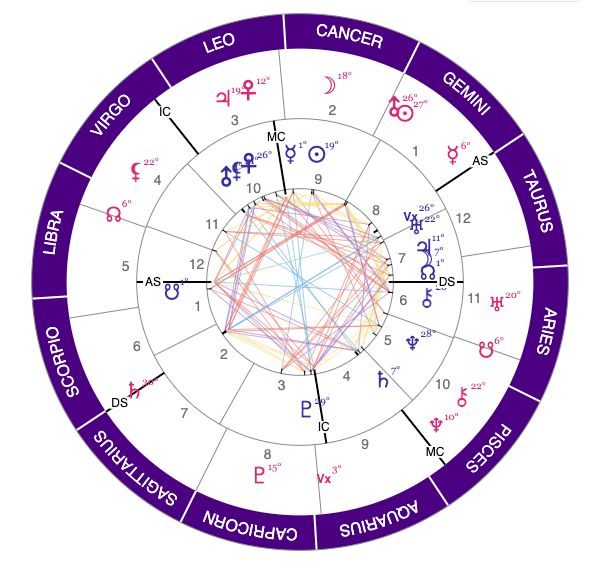
- Create two natal charts and one synastry chart
- Check the Sun, Moon, and Rising signs
- Review Moon, Mercury, Venus, and Mars contacts
- Mark conjunctions, trines, sextiles, squares, and oppositions
- Study the 5th, 7th, and 8th house overlays for romance and bonding
- Review Saturn contacts for long-term potential
- Create a composite chart for the relationship theme
If you want a simple scoring method, use this basic framework:
- Emotional compatibility — Moon contacts
- Communication compatibility — Mercury contacts
- Romantic compatibility — Venus contacts
- Physical compatibility — Mars contacts
- Long-term stability — Saturn contacts
You can rate each area from 1 to 10, then review the total. This will not replace a full reading, but it gives a much better overview than a basic zodiac match chart.
What online compatibility calculators usually miss
Many free calculators are convenient, but they often simplify the chart too much. Common weaknesses include:
- too much focus on Sun signs
- no birth time precision
- little or no house overlay analysis
- no explanation of Saturn or composite patterns
- generic text that sounds flattering but says very little
This creates another common problem: people get a high score and assume the relationship should be easy, then feel disappointed when real-life patterns are much more complex.
Can astrology compatibility predict whether a relationship will work?
Astrology can help you understand patterns, attraction, emotional needs, and likely pressure points. It cannot guarantee success or failure. Relationship outcomes still depend on communication, trust, values, timing, and behavior.
It is also important to stay realistic. Astrology is widely used, but it is not considered a science by the modern scientific community. That means it works best as a reflective tool, not as a replacement for direct conversation, boundaries, or common sense.
A useful way to think about it is this: astrology compatibility can show where love may flow easily, where tension may build, and what each person may need. It does not remove personal responsibility.
Signs that your compatibility reading deserves more attention
Take a closer look if your chart comparison shows:
- strong Moon-Saturn contacts
- repeated Mercury squares or oppositions
- heavy 12th house overlays
- intense 8th house activation
- very strong Venus-Mars attraction but weak emotional support
These patterns are not automatic red flags, but they often show the areas where couples experience the most conflict, confusion, or emotional intensity.
A practical example of astrology compatibility calculation
Imagine this simplified match:
- Person A Moon trine Person B Moon
- Person A Mercury square Person B Mercury
- Person A Venus conjunct Person B Mars
- Person A Saturn trine Person B Sun
That combination may suggest:
- strong emotional understanding
- communication friction
- high attraction
- long-term seriousness
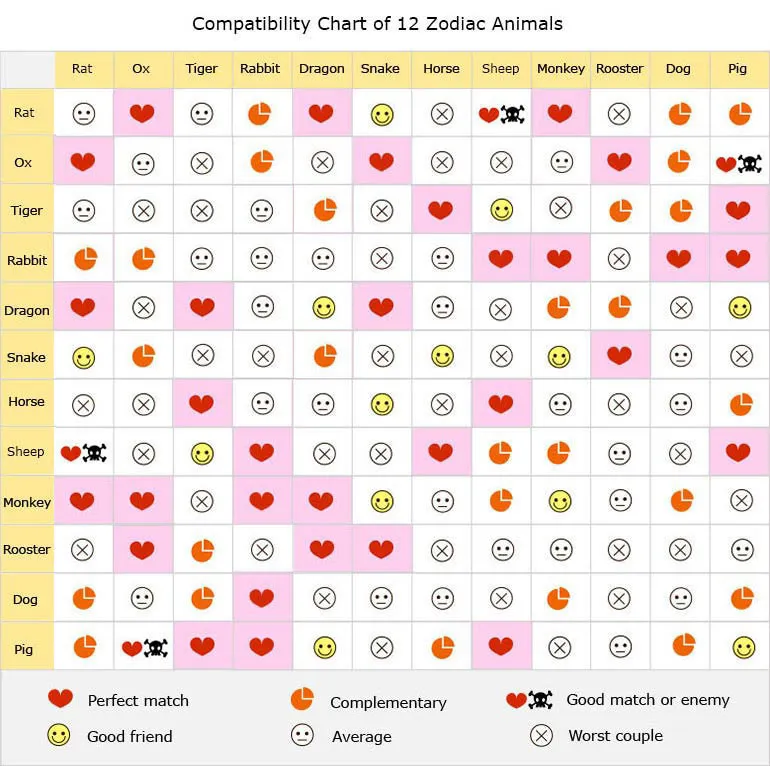
So the relationship may feel loving and meaningful, but arguments may keep starting because the couple processes information differently. This is why full-chart analysis is more useful than one-word compatibility labels like “perfect” or “bad.”
Final answer: how do I calculate my astrology compatibility?
You calculate your astrology compatibility by comparing two full natal charts through synastry, then checking your Big Three, personal planets, major aspects, house overlays, and long-term indicators such as Saturn. For the most complete result, add a composite chart.
If you only compare Sun signs, you get a quick impression. If you compare full birth charts, you get a real compatibility analysis.
The best approach is simple:
- Use exact birth data for both people
- Start with Sun, Moon, and Rising signs
- Check Moon, Mercury, Venus, and Mars contacts
- Review major aspects and house overlays
- Study Saturn for stability and lessons
- Use a composite chart for the relationship pattern
That gives you a much clearer view of attraction, emotional fit, daily communication, and long-term potential.

I am Emily Carter, an author who writes practical and easy-to-understand articles for informational websites, focusing on everyday topics, digital culture, and useful knowledge people search for online. I graduated from the University of California, Berkeley with a Bachelor’s degree in Journalism, where I studied media communication and modern online publishing.